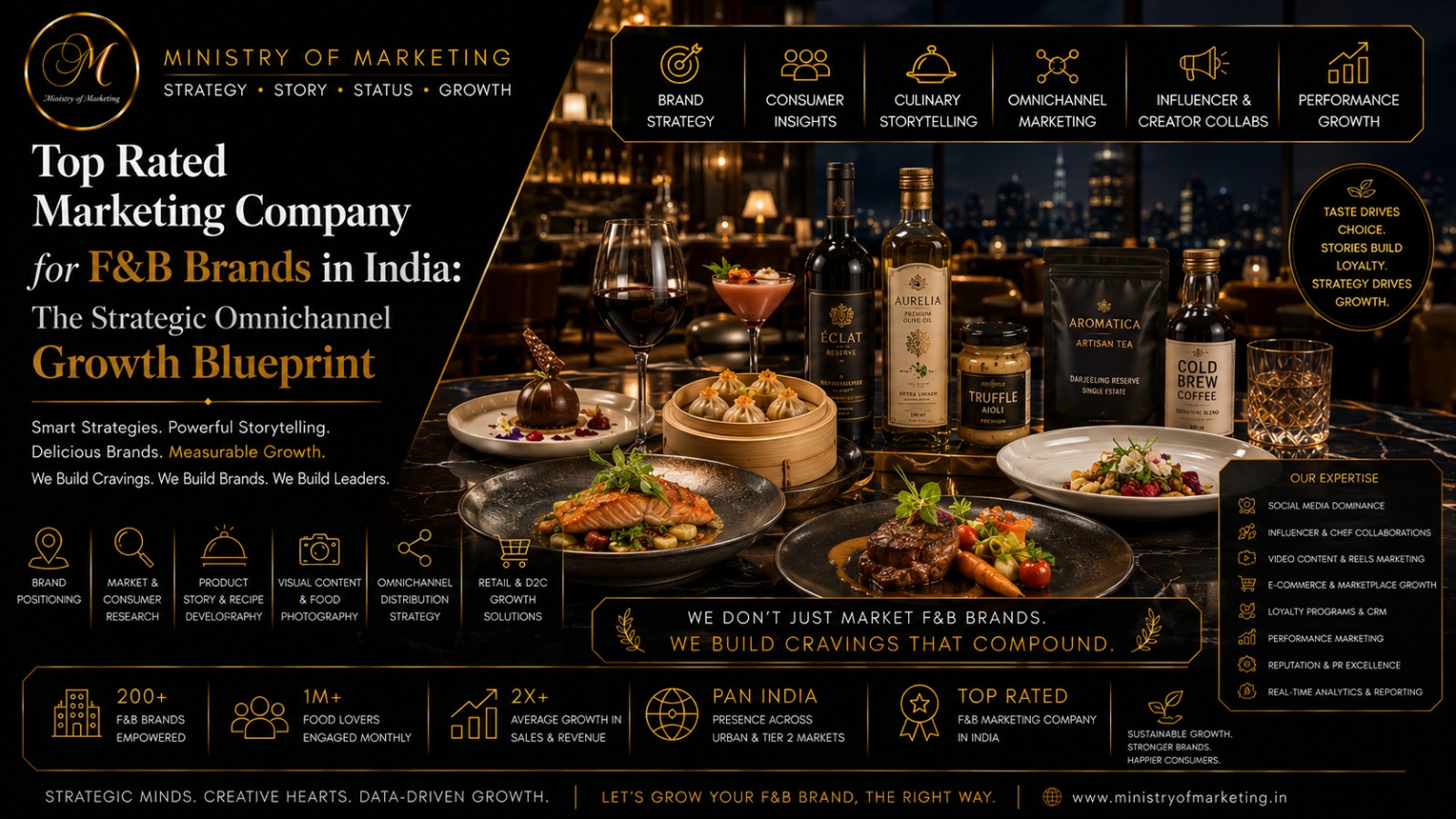
Top Rated Marketing Company for F&B Brands in India: The Strategic Omnichannel Growth Blueprint
Marketing F&B Brands in India
The Food and Beverage (F&B) industry in India is evolving at breakneck speed. Driven by shifting consumer lifestyles, clean-label ingredient awareness, the explosion of rapid delivery platforms, and an appetite for premium artisanal snacks and functional drinks, Indian consumers are actively discovering and adopting new culinary brands.
However, operating in the F&B sector requires navigating complex supply chain margins, short shelf-life windows, fierce shelf competition in modern trade supermarkets, and rising customer acquisition costs across digital channels. Achieving breakout success requires more than generic product photos and basic ad placements. It demands appetite-stimulating visual media, dark-store quick commerce optimization, Answer Engine Optimization (AEO), regulatory compliance with food safety authorities, and high-velocity retail trade activations.
A top rated marketing company for F&B brands in India functions as an integrated category growth partner. By combining macro sensory food cinematography, automated sampling mechanics, marketplace retail media synchronization, and high-retention replenishment engines, elite agencies turn emerging packaged goods and beverages into everyday household favorites.
This strategic guide explores the core competencies, omnichannel architectures, and evaluation standards required to select the premier F&B marketing partner in India.
1. Why F&B Brands Need a Specialized Marketing Growth Partner
A general digital agency approaches food and beverage products like standard static consumer goods. This oversight leads to uninspired visual assets, poor packaging standout, high return rates on perishable items, and ad spend that fails to generate movement off physical retail shelves.
A specialized F&B marketing company delivers four mission-critical capabilities:
1. Macro Sensory Storytelling and Appetite Appeal Production
Taste is evaluated visually before purchase. Leading F&B agencies produce high-definition macro cinematography: sizzling textures, slow-motion beverage splashes, steam rising from fresh preparations, and dynamic ingredient waterfalls that trigger immediate taste cravings on mobile screens.
2. Dark Store and Instant Delivery Search Dominance
Urban grocery shopping is dominated by instant delivery platforms. Leading agencies optimize brand discovery across quick commerce networks by designing mobile-friendly thumbnail pack renders, targeting high-intent meal and snack search terms, and pacing ad spend around peak consumption hours like breakfast routines and evening snack breaks.
3. Modern Trade and Point of Sale Shelf Standout
Securing shelf placement in supermarkets is only the beginning; products must achieve consistent sales velocity. Specialized agencies design attention-grabbing end-cap displays, hanging strip banners, floor standing units, and retail sampling activations that capture shopper attention in supermarket aisles.
4. Clean-Label Nutrition and Answer Engine Optimization (AEO)
Modern consumers research ingredients, allergens, and dietary compatibility through conversational AI engines and search platforms (such as “best gluten free high protein snacks” or “natural zero calorie sparkling water in India”). Specialized agencies optimize structured nutritional schema and educational content to position the brand as the top verified health choice.
2. Core Service Verticals of an Elite F&B Growth Agency
Brand Identity, Packaging Architecture, and FSSAI Compliance
- Establishing distinct brand positioning, memorable mascot art, and appetizing color palettes tailored to target demographic niches.
- Designing mobile-legible and shelf-dominant packaging compliant with Food Safety and Standards Authority of India (FSSAI) guidelines.
- Structuring clean back-of-pack nutritional panels, ingredient provenance storytelling, and allergen callouts.
Omnichannel Performance Marketing & Instant Grocery Scale
- Managed high-converting performance ad campaigns across Meta, Google, and visual search networks optimized for trial pack purchases.
- Deploying retail media campaigns across platforms like Amazon, Bigbasket, and quick delivery channels during peak meal planning hours.
- Running geo-targeted local ad campaigns around newly stocked supermarkets and retail store chains to accelerate inventory sell-through.
Culinary Influencer Seeding & Chef Collaborations
- Partnering with credible home chefs, culinary creators, and nutritionists to develop innovative recipe videos featuring the brand’s products.
- Coordinating sampling kit distributions to fitness trainers, lifestyle influencers, and corporate office communities for authentic unboxing reactions.
- Amplifying organic user-generated recipe content through high-converting paid social ad rotations.
Consumer Lifecycle Marketing and Subscription Engines
- Setting up automated replenishment workflows on messaging channels for daily essentials like coffee beans, breakfast cereals, or protein snacks.
- Bundling complementary items into multi-pack discovery boxes to elevate average order values and encourage category exploration.
- Designing loyalty reward tiers that incentivize customers to leave verified reviews and share recipe creations.
3. How to Choose the Best F&B Marketing Agency in India
When vetting prospective marketing agencies, food and beverage brand founders and CMOs should evaluate four essential benchmarks:
- Sensory Visual Production Studio: Does the agency possess a specialized culinary production studio capable of capturing food textures and beverage pours with commercial-grade styling?
- Quick Commerce and Retail Trade Fluency: Do they understand dark store pin-code inventory dynamics, slotting fees, distributor margins, and trade promotion mechanisms?
- Regulatory Fluency: Does the agency team understand FSSAI advertising codes, avoiding misleading health claims while highlighting legitimate nutritional benefits?
- Velocity-Driven Metrics: Does the agency measure success by unit velocity, repeat purchase rates, and retail off-take rather than superficial vanity impressions?
Frequently Asked Questions (FAQs)
1. What does a specialized marketing company for F&B brands in India do?
A specialized F&B marketing agency manages end-to-end brand strategy, sensory video production, packaging design, quick commerce optimization, retail media advertising, culinary influencer collaborations, and customer retention workflows for packaged foods, drinks, gourmet labels, and cloud kitchens.
2. Why should an F&B brand hire a specialized agency over a general marketing firm?
Food and beverage products rely heavily on sensory appetite appeal, short impulse buying cycles, packaging visibility, and localized physical distribution. A general agency often lacks the food styling expertise, quick commerce operational knowledge, and retail trade understanding required to move inventory off shelves.
3. How does Answer Engine Optimization (AEO) benefit food and beverage brands?
Answer Engine Optimization ensures that when health-conscious consumers ask conversational AI tools and search assistants for dietary recommendations (such as low-sugar diabetic snacks, high-protein vegan beverages, or organic baby foods), the brand’s products are cited as the authoritative, verified choice.
4. What is the most effective digital strategy to drive trial for a new F&B brand?
The most effective strategy combines low-barrier discovery trial packs, sample inclusions inside high-velocity e-commerce deliveries, interactive recipe videos on social media, and geo-targeted digital discount vouchers redeemable at local grocery stores.
5. How do marketing companies optimize F&B brands for quick commerce apps?
Agencies optimize listings by designing high-contrast pack thumbnails readable on small mobile screens, writing functional benefit-driven titles, securing top-of-search keyword placements, and scheduling ad spend during peak impulse eating hours.
6. What role does packaging design play in F&B marketing?
Packaging is a brand’s primary sales tool. In retail aisles and digital app thumbnails, packaging must communicate taste appeal, brand identity, key nutritional USPs, and certified quality standards within three seconds to secure purchase decisions.
7. How do agencies market health, organic, and clean-label food products without greenwashing?
Agencies focus on verifiable facts: highlighting certified organic sourcing, third-party laboratory test results, transparent ingredient percentages, non-GMO verifications, and clear explanations of clean processing methods.
8. What digital advertising channels perform best for F&B brands in India?
Visual networks like Instagram, YouTube, and Meta drive massive taste craving and recipe discovery. Search engine ads capture high-intent dietary queries, while retail media ads on quick commerce and online grocery platforms deliver immediate transactional checkout.
9. How do food marketing companies reduce Customer Acquisition Cost (CAC) for D2C F&B brands?
Agencies lower CAC by bundling high-margin multi-packs, implementing automated repeat re-order reminders via messaging apps, running user-generated recipe ads, and using high-converting video hooks that improve ad click-through rates.
10. What metrics evaluate the success of an F&B marketing campaign?
Key performance indicators include Return on Ad Spend (ROAS), Customer Acquisition Cost (CAC), Average Order Value (AOV), 30-Day and 60-Day Repeat Purchase Rates, Quick Commerce Category Share of Voice, and Offline Retail Velocity per store per week.
11. How do marketing agencies help cloud kitchens and delivery-only food brands grow?
Agencies help cloud kitchens by running hyper-targeted geo-fenced social ads within a 5-kilometer kitchen radius, optimizing listings and photography on food delivery apps, running lunchtime office promotions, and implementing direct online ordering loyalty portals.
12. What is the importance of sensory macro video in F&B marketing?
Macro video captures the sizzle, crunch, melt, and pour of food products, engaging viewers’ sensory memories and triggering immediate appetite appeal, which significantly boosts click-through and purchase conversion rates compared to static photos.
13. How do agencies manage seasonal and festive marketing campaigns for F&B brands?
Agencies plan festive strategies months in advance by designing premium gift hampers, launching limited-edition holiday flavor variants, and executing high-impact promotional campaigns around Diwali, Raksha Bandhan, New Year, and regional harvest festivals.
14. How can a new gourmet food brand build credibility alongside legacy FMCG giants?
New brands build authority by highlighting small-batch artisanal craftsmanship, superior ethical ingredient sourcing, chef endorsements, transparent processing methods, and authentic customer video reviews that showcase superior taste.
15. Why is mobile website performance critical for direct-to-consumer F&B brands?
Over eighty-five percent of online food purchases and snack discoveries occur on mobile devices. A mobile-friendly food store must load in under two seconds, feature smooth product carousels with clear dietary tags, and offer instant one-click payment checkout.
16. How do marketing companies support physical retail distribution expansion?
Agencies analyze digital sales data by pin code to identify high-demand geographic clusters, equip sales teams with compelling retailer pitch decks, design high-visibility point-of-sale displays, and deploy localized mobile ads around new store partner locations.
17. What content marketing strategies work best for functional beverage brands?
Effective content strategies include scientific breakdown videos on electrolyte absorption, energy metabolism explainers, fitness creator workout routines, afternoon slump replacement guides, and hydration tracking infographics.
18. How do F&B marketing agencies prevent creative ad fatigue?
Agencies maintain strong ad performance by producing fresh recipe variations weekly, testing diverse visual hooks (such as unboxing, unscripted taste tests, and cooking tutorials), and rotating different usage occasions across paid media sets.
19. How do agencies utilize messaging automation for customer retention in F&B?
Automated messaging systems deliver instant order tracking, share creative recipe ideas using the purchased product, send replenishment prompts based on consumption timelines, and invite loyal customers to try unreleased flavor samples.
20. What is the standard onboarding process when partnering with a top F&B marketing agency?
The engagement begins with a comprehensive product tasting, ingredient audit, and competitive shelf benchmark, followed by visual brand identity alignment, tracking pixel and analytics configuration, sensory video asset production, and the rollout of an integrated multi-channel growth campaign.

Ready to see real results?
Book your free marketing audit today with Ministry of Marketing and discover how we can help you scale profitably.
Visit: www.ministryofmarketing.in | Email: team@ministryofmarketing.in