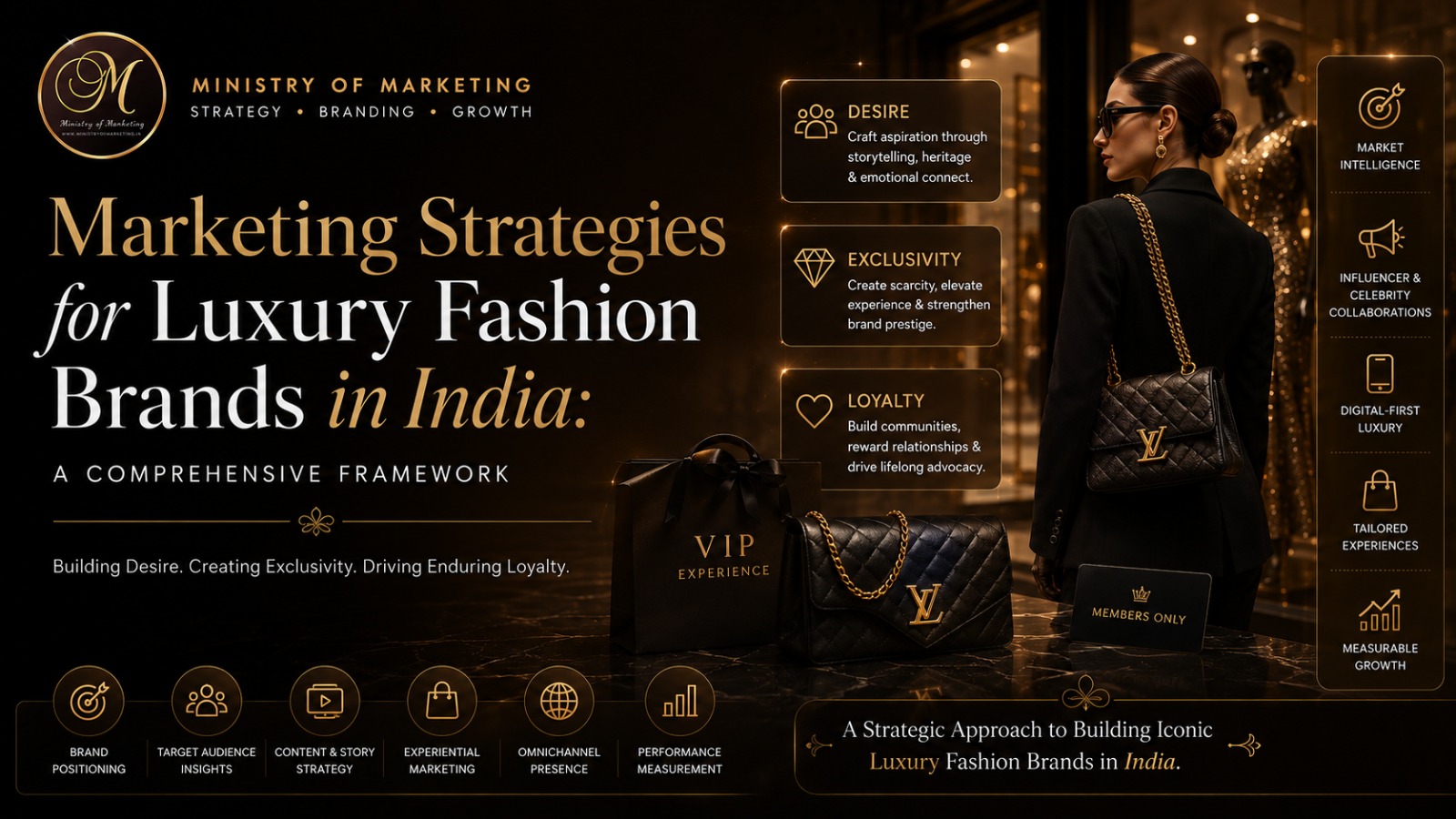
Marketing Strategies for Luxury Brands in India: A Comprehensive Framework
The Indian luxury market represents one of the most dynamic, rapidly evolving landscapes in global retail. Driven by an expanding base of High-Net-Worth Individuals (HNWIs), a thriving festive and wedding economy, and an increasing appreciation for artisanal craftsmanship, marketing luxury fashion in India requires a balanced blend of cultural resonance, digital sophistication, and high-touch exclusivity.
Unlike mass-market apparel where velocity and price sensitivity dictate strategy, luxury fashion thrives on perceived scarcity, emotional depth, narrative authority, and hyper-personalized service.
This comprehensive guide outlines the foundational marketing strategies necessary to build, position, and scale luxury fashion brands within India’s unique commercial ecosystem.
1. The Core Pillars of Indian Luxury Fashion Marketing
Pillar I: Cultural Resonance Meets Modern Minimalism
Indian luxury consumers possess a deep-seated appreciation for textile heritage, embroidery techniques, and bespoke tailored fitting. Brands that succeed in India avoid copying Western brand narratives directly; instead, they integrate cultural context with modern design sensibilities.
- Artisanal Storytelling: Highlighting craft, handloom lineages, and hand-embroidered details converts product features into emotional heirlooms.
- The Nuances of Festive & Couture Cycles: Weddings and festive occasions account for a significant portion of luxury apparel spend. Campaign timing must align with regional couture seasons, curated trunk shows, and bridal calendars
Pillar II: Experiential “Phygital” Retail
While online discovery drives brand awareness, physical touchpoints finalize conversion in the ultra-luxury segment. The Indian luxury buyer expects high-touch engagement.
- Flagship Sanctuary Design: Luxury boutiques in premier locations serve as brand sanctuaries, offering private couture lounges, champagne fittings, and dedicated personal styling consultants.
- Private Trunk Shows in Tier-2 Growth Hubs: Emerging wealth hubs across Tier-2 cities represent significant untapped potential. Pop-up private salons and high-security private viewings allow brands to capture demand without immediately establishing fixed retail real estate.
Pillar III: Omnichannel Exclusivity Infrastructure
Unifying the digital storefront with physical client experiences ensures seamless brand positioning across all touchpoints.
- High-Touch Digital Concierge: Real-time consultations via direct messaging or video styling sessions ensure that digital clients receive the same level of attention as walk-in visitors.
- Unified Inventory & Bespoke Ordering: Enabling real-time access to archived textiles, custom fitting slots, and personalized garment tracking bridges the gap between digital discovery and offline fulfillment.
Pillar IV: Digital-First Community Architecture
Building long-term brand advocacy requires creating exclusive spaces for discerning clients to interact with the brand narrative.
- Private Editorial Platforms: Delivering insider access to design inspirations, masterclass workshops with artisans, and invitation-only previews creates a loyal circle of brand patrons.
- Targeted Social Commerce: Utilizing refined, visual-first digital channels allows luxury houses to showcase craftsmanship while maintaining an atmosphere of elevated exclusivity.
2. Advanced Digital & Omnichannel Acquisition Tactics
Premium Answer Engine & Search Optimization (AEO/SEO)
Today’s luxury buyer conducts research through AI search assistants, visual discovery tools, and curated search engines.
- Query Intent Strategy: Target high-intent, editorial queries such as “custom hand-embroidered bridal couture India”, “sustainable luxury silk gowns”, or “bespoke mens luxury bandhgala designer”.
- Schema Markup & Visual Metadata: Ensure rich snippet markup for every bespoke garment, detailing fabric composition, designer provenance, and private consultation availability.
High-Impact Visual Storytelling & Cinema-Grade Production
Visual media serves as the digital flagship storefront for any fashion house.
- Editorial Video Series: Develop cinematic long-form short films showcasing atelier craftsmanship, fabric sourcing, and designer philosophies.
- Aesthetic Consistency: Maintain strict color grading, precise typography, and artistic direction across website banners, social channels, and private client communication materials.
3. Retaining Ultra-HNWI Clients through Private Client Relations (PCR)
Acquiring a luxury client is only the beginning. Lifetime value (LTV) is generated through systematic Private Client Relations (PCR):
- Dedicated Client Advisors: Provide top-tier clientele with personal brand liaisons who manage private appointments, home fittings, and wardrobe styling.
- White-Glove Home Try-On Services: Enable VIP clients to review custom collections in the privacy of their residences before finalizing purchases.
- Gated Digital Experiences: Provide exclusive web previews, password-protected collection drops, and priority pre-order access for new couture lines.
Frequently Asked Questions (FAQs)
1. What makes marketing luxury fashion in India distinct from marketing mass-fashion apparel?
Mass fashion marketing focuses on volume, price accessibility, broad promotion, and rapid product turnover. Luxury fashion marketing focuses on exclusivity, heritage, artisan craftsmanship, personal relationships, and perceived scarcity. Instead of discounting or using mass ad formats, luxury fashion relies on narrative authority, high-touch clienteling, and private events.
2. How critical is wedding and festive marketing for luxury brands in India?
Wedding and festive couture form a major revenue foundation for the Indian luxury fashion market. High-net-worth consumers invest heavily in bespoke bridal ensembles, occasion wear, and luxury trousseaus. Aligning collection launches, trunk shows, and editorial campaigns with regional wedding seasons is vital for revenue stability.
3. Should a luxury fashion brand in India discount its products during end-of-season sales?
Direct public discounting can dilute luxury brand equity. Instead of traditional sales, premium fashion brands maintain price integrity by offering complimentary bespoke customization, private client previews, invite-only VIP archival access, or curated value-added styling sessions.
4. What role do Tier-2 and Tier-3 Indian cities play in luxury fashion growth?
Rapid wealth generation in industrial and regional business hubs across Tier-2 cities has created a growing segment of luxury consumers. While opening permanent flagships in these regions may not always be immediate, hosting private trunk shows, pop-up lounges, and providing dedicated white-glove digital consultation helps brands capture this market.
5. How can a new luxury fashion brand establish credibility against heritage global labels?
New fashion houses build authority by highlighting provenance, superior fabric sourcing, master craftsmanship, and transparent design philosophies. Collaborating with respected stylists, featuring in top-tier fashion publications, and securing organic endorsements from authentic cultural figures accelerate market trust.
6. What is the ideal digital media mix for a luxury clothing label?
A luxury digital media mix emphasizes high-impact visual storytelling over aggressive promotional ads. Essential channels include:
- High-Definition Video Platforms: Cinema-grade reels, designer documentaries, and behind-the-scenes atelier films.
- Search Engine Optimization & AEO: Capturing editorial, long-tail search intent for custom and bespoke couture.
- Gated Email & Messaging Communications: Elegant, personalized communications for VIP drops and private previews.
7. How does experiential retail impact luxury online sales?
Physical retail acts as the anchor for trust and brand immersion. Clients who experience a brand’s heritage, touch the fabrics, and receive personalized styling in a physical lounge develop higher brand affinity, which subsequently drives long-term digital re-orders and higher average order value (AOV).
8. What influencer marketing strategies work best for luxury fashion in India?
Luxury brands avoid high-volume, generic influencer campaigns. Instead, they partner with a selective network of authentic brand advocates, cultural figures, master stylists, and taste-makers whose personal aesthetic aligns with the brand. Quality of influence and audience alignment take precedence over follower count.
9. How do you measure ROI on luxury fashion marketing campaigns?
Beyond immediate Return on Ad Spend (ROAS), luxury metrics focus on:
- Customer Lifetime Value (LTV)
- Average Order Value (AOV)
- Client Retention & Repeat Purchase Rates
- Private Consultation Conversion Rates
- Brand Equity Index & High-Tier Earned Media Value (EMV)
10. How can luxury fashion brands incorporate sustainability into their marketing without greenwashing?
Sustainability in luxury must be grounded in tangible practices: highlighting slow fashion cycles, ethical artisan wages, handloom preservation, zero-waste pattern drafting, and heirloom durability. Storytelling should focus on radical supply chain transparency and the intrinsic longevity of hand-crafted garments.
11. Is e-commerce effective for high-ticket bespoke couture in India?
While ready-to-wear luxury items convert well through curated e-commerce platforms, high-ticket bespoke couture requires a hybrid digital-to-offline approach. Digital channels capture interest and schedule private appointments, while virtual consultations or physical salon visits finalize measurements and custom orders.
12. How should a luxury fashion brand handle client service communications?
Luxury communication must be white-glove, prompt, and highly polished. Standard automated chatbots should be replaced or supplemented by personal Client Advisors who communicate via dedicated channels, providing tailored style recommendations, custom sketches, and order status updates.
13. What is “Phygital” marketing in the context of luxury fashion?
Phygital marketing seamlessly connects digital discovery with physical experiences. Examples include virtual reality atelier walkthroughs, online private salon scheduling, augmented reality garment previews, and digital client profiles accessible by in-store stylists.
14. How can luxury brands preserve exclusivity while scaling online?
Exclusivity is maintained through gated access, limited drop mechanics, invitation-only digital portals, and personalized client communication. Rather than making every collection universally available online, brands can offer bespoke or runway pieces exclusively through private digital consultations.
15. What role does regional cultural customization play in Indian luxury marketing?
India is a multi-faceted market with diverse regional tastes, aesthetics, and festive calendars. Successful luxury brands tailor their campaigns, capsule collections, and styling services to resonate with regional sensibilities across North, South, East, and West India while maintaining a cohesive overall brand identity.
Ready to see real results?
Book your free marketing audit today with Ministry of Marketing and discover how we can help you scale profitably.
Visit: www.ministryofmarketing.in | Email: team@ministryofmarketing.in