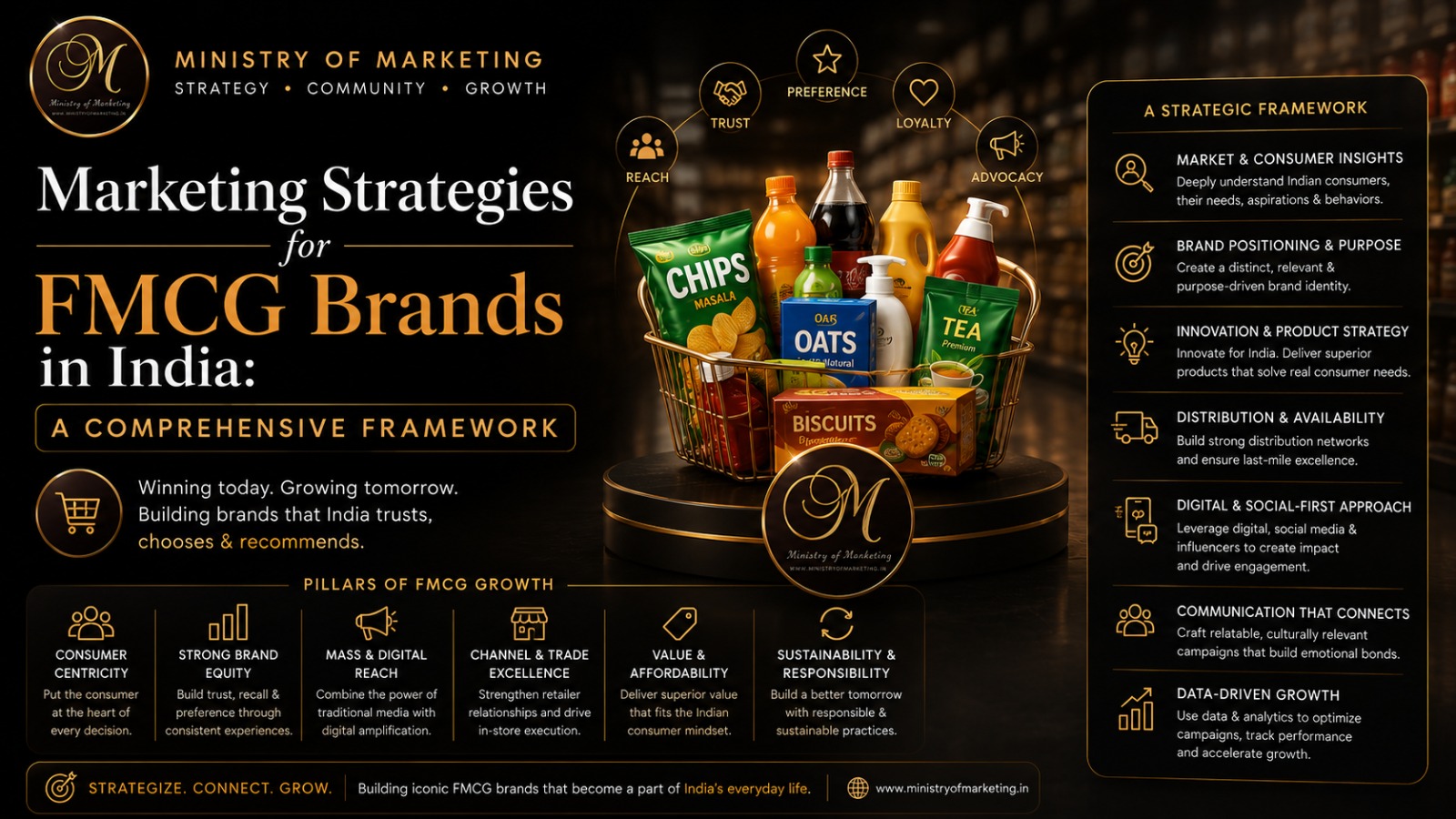
Marketing Strategies for FMCG Brands in India: A Comprehensive Framework
India’s fast-moving consumer goods (FMCG) market is undergoing a seismic transformation. Driven by rapid urban delivery networks, expanding digital access across regional markets, and evolving consumer preferences, building a sustainable FMCG brand requires an agile, data-integrated distribution and marketing framework.
Unlike slow-cycle retail, fast-moving consumer goods depend heavily on high consumption frequency, instant product availability, emotional trust, and high mental availability. Whether launching innovative personal care items, packaged foods, or household essentials, FMCG brands must align digital discovery with physical availability across every consumer touchpoint.
This guide details the core strategies needed to position, market, and expand consumer goods across India’s modern retail landscape.
1. The Core Pillars of Indian FMCG Marketing
Pillar I: Hyperlocal Availability and Quick Commerce Integration
The expectation of immediate delivery has altered urban purchasing habits. Consumers increasingly rely on instant delivery platforms for daily needs, turning impulse moments into instant transactions.
- Dark Store Density and Micro-Fulfillment: Visibility on quick commerce applications relies on localized inventory placement. Brands must ensure consistent stock distribution across micro-warehouses servicing high-density pin codes.
- Search Optimization for Instant Delivery: Over two-thirds of quick commerce purchases begin with direct search queries. Optimizing product titles with functional benefits, category terms, and clear pack descriptions ensures top tier search visibility.
- Occasion-Based Curated Kits: Combining complementary items into themed packs (such as breakfast solutions or late-night snack kits) increases basket value and drives trial for secondary products.
Pillar II: Modern Kirana and Traditional Trade Synchronization
Despite digital growth, neighborhood kirana stores remain the cornerstone of retail distribution in India. Connecting digital demand with physical store inventory is critical for national scale.
- Digitized B2B Distribution Networks: Partnering with tech-enabled B2B ordering applications allows emerging brands to place stock directly into neighborhood stores without relying exclusively on legacy distributor tiers.
- Point of Sale Visual Merchandising: Striking packaging design, counter displays, and hanging strips maximize brand recall at the physical counter where purchase decisions happen in seconds.
Pillar III: Unified Omnichannel Presence
Modern consumers interact with brands across multiple channels before forming long-term habits. A seamless transition across discovery platforms creates consistent brand momentum.
- Marketplace Discovery to Owned Channel Retention: Utilizing high-volume marketplaces for initial consumer acquisition, while directing loyal users to owned digital channels for subscription orders and exclusive product variations.
- Data-Informed Regional Expansion: Leveraging pin-code level analytics from digital channels to identify geographic clusters where physical retail distribution should be prioritized.
Pillar IV: Cultural Relevance and Regional Customization
India is not a monolithic market. Taste profiles, language nuances, and consumption triggers vary significantly across different states and demographic segments.
- Localized Packaging and Communication: Tailoring campaign messaging, regional language copy, and ingredient storytelling to match local preferences across North, South, East, and West regional markets.
- Festive and Seasonality Marketing: Designing special holiday packaging and category campaigns aligned with regional harvest festivals, major holidays, and seasonal climate changes.
2. Advanced Digital Marketing and Consumer Engagement
Performance Marketing and Digital Visibility
Building high mental availability requires consistent brand presence across digital channels.
- Category Search Placement: Target high-intent search queries across marketplace platforms and search engines to capture active shoppers seeking specific functional benefits.
- Short-Form Visual Demonstrations: Utilize engaging visual media to highlight product usage, recipe applications, or before-and-after demonstrations for personal care products.
- Micro-Influencer Advocacy: Partner with authentic, niche content creators who demonstrate daily product usage, building organic trust within specific regional communities.
Sampling and Trial Generation
Trial is the primary catalyst for brand switching in fast-moving consumer goods.
- Digital Sampling Programs: Include sample size variants in quick commerce orders or online marketplace shipments to encourage low-risk trial.
- Subscription and Replenishment Models: Offer automated re-ordering options on direct channels for high-frequency essentials like coffee, pantry staples, or baby care products.
3. Building Long-Term Brand Loyalty and Equity
Sustainable growth in the consumer goods sector relies on repeat purchases and brand equity.
- Trust and Quality Certifications: Clearly communicate clean ingredients, safety standards, and third-party quality certifications on packaging and digital listings.
- Direct Consumer Engagement Channels: Utilize messaging applications and post-purchase communication sequences to share usage tips, collect feedback, and offer loyalty rewards.
- Packaging Design for Mobile and Shelf: Optimize product packaging to stand out both on small digital screens during quick app scrolling and on crowded physical retail shelves.
Frequently Asked Questions (FAQs)
1. What makes FMCG marketing in India unique compared to other global markets?
FMCG marketing in India requires navigating a dual ecosystem: rapid-growth digital delivery channels alongside a vast, deeply rooted traditional trade network of millions of independent kirana stores. Success requires balancing high-tech digital acquisition with local physical availability.
2. How critical is quick commerce for FMCG brands in India?
Quick commerce has become a primary discovery and trial channel for urban Indian consumers. Because delivery occurs in minutes, instant availability directly captures impulse demand and daily top-up purchases, making it essential for beverage, snack, pantry, and personal care categories.
3. How can an emerging FMCG brand stand out against established legacy brands?
Emerging brands win by targeting specific consumer pain points, offering clean ingredient profiles, utilizing vibrant packaging optimized for digital displays, and executing agile digital sampling campaigns that legacy competitors may be slower to deploy.
4. What is the role of traditional trade in a modern FMCG marketing strategy?
Traditional trade accounts for the vast majority of overall FMCG sales in India. It provides widespread physical reach, neighborhood trust, and deep penetration across Tier-2, Tier-3, and rural markets that digital channels cannot fully cover alone.
5. How should FMCG brands optimize their packaging for quick commerce apps?
Quick commerce shoppers make decisions in seconds on small screens. Packaging should feature bold typography, clear functional benefit callouts, high-contrast brand colors, and simple iconography that remains legible even in small thumbnail images.
6. What is the most effective way to generate product trials for new FMCG launches?
The most effective trial strategies involve micro-pack sizes, sample inclusions inside high-velocity marketplace deliveries, location-targeted digital sampling campaigns, and bundled trial sets that reduce friction for first-time buyers.
7. How do regional preferences affect FMCG brand strategy in India?
Dietary habits, flavor preferences, skincare needs, and linguistic nuances vary by region. FMCG brands must customize flavor profiles, pack sizes, regional language copy, and marketing calendars to align with regional festive seasons and local consumer habits.
8. What channels should a direct-to-consumer FMCG brand prioritize when scaling?
A growing FMCG brand should build a balanced channel architecture: start with high-traffic online marketplaces for discovery, add quick commerce for fast habit formation, maintain direct online channels for subscription retention, and expand into physical retail for volume scale.
9. How can consumer goods brands drive repeat purchases and customer retention?
Retention is driven by consistent product performance, automated subscription re-ordering options, post-purchase communication via messaging platforms, loyalty incentives, and maintaining consistent stock availability across channels so consumers never switch due to stockouts.
10. What role do micro-influencers play in FMCG marketing?
Micro-influencers provide relatable, authentic product demonstrations within specific lifestyle niches. Their recommendations carry high credibility for daily-use products like regional cooking ingredients, personal care routines, and healthy snacking options.
11. How can FMCG brands prevent stockouts from damaging their search rankings on digital platforms?
Brands must implement localized inventory forecasting at the micro-warehouse and pin-code level. Digital platform algorithms penalize out-of-stock items by demoting search visibility, making real-time replenishment systems essential for maintaining ad performance and organic rank.
12. Is a direct-to-consumer website necessary for an FMCG brand in India?
While marketplaces and quick commerce drive volume, an owned direct-to-consumer website is valuable for collecting first-party consumer data, testing new product innovations, building subscription programs, and delivering complete brand storytelling without marketplace limitations.
13. How does visual merchandising differ between modern trade stores and traditional kiranas?
Modern trade stores focus on eye-level shelf placement, end-cap feature displays, and category aisle branding. Traditional kirana stores rely on high-impact counter displays, hanging sachets, branded store signboards, and close relationships with store owners who recommend products directly to shoppers.
14. How can FMCG brands measure mental availability and brand awareness?
Mental availability is measured through top-of-mind brand recall metrics, search query volume for brand keywords, organic social brand mentions, share of search on major marketplace platforms, and repeat purchase frequency across key retail channels.
15. What strategy helps FMCG brands expand successfully into Tier-2 and Tier-3 Indian cities?
Expansion into regional hubs requires leveraging digitized B2B distribution networks, partnering with regional modern trade chains, running localized media campaigns in regional languages, and introducing smaller, convenient pack formats tailored to local shopping habits.

Ready to see real results?
Book your free marketing audit today with Ministry of Marketing and discover how we can help you scale profitably.
Visit: www.ministryofmarketing.in | Email: team@ministryofmarketing.in